
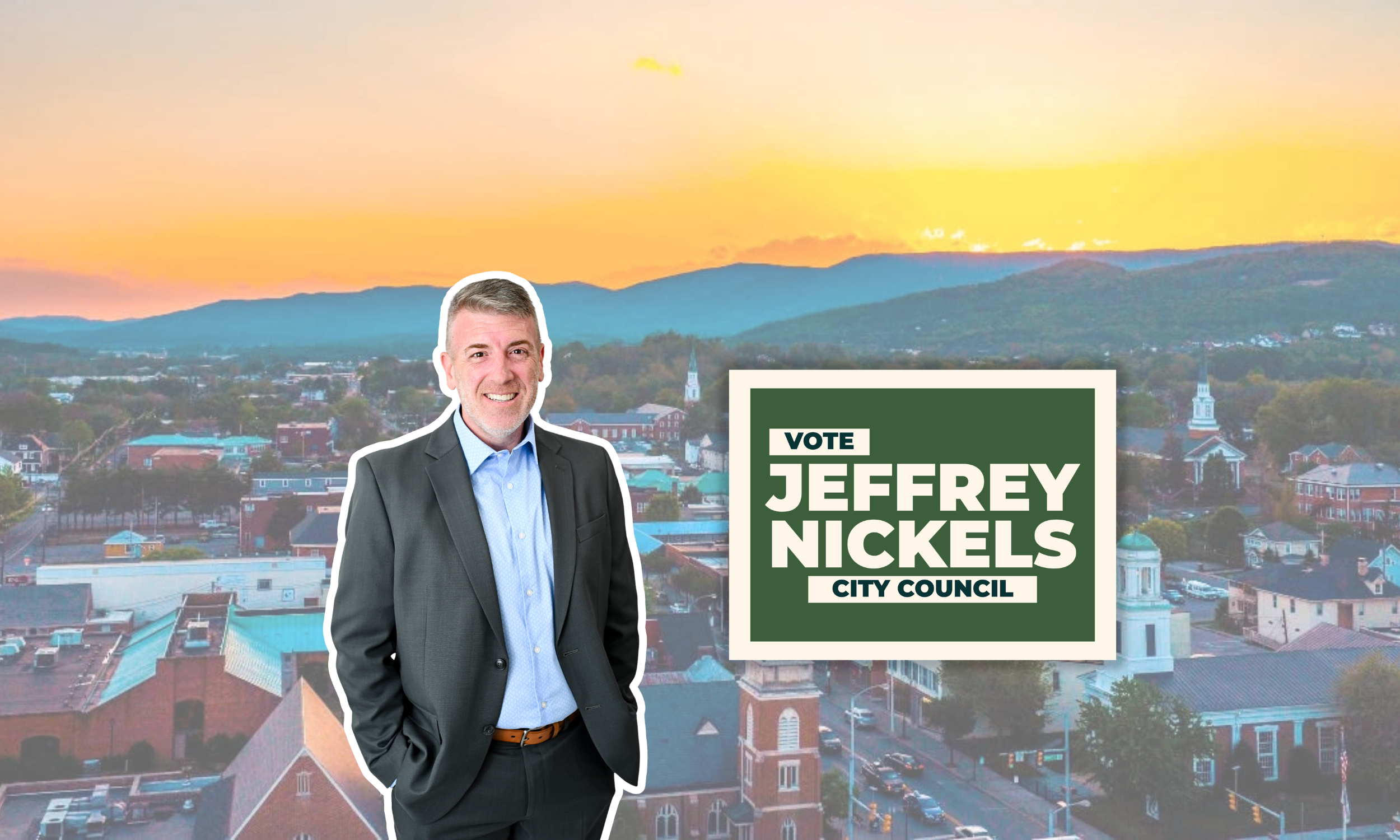
Jeffrey Nickels is a husband, father, local business owner and volunteer, and former financial industry professional running for Salem City Council to lead our community into the future.
The Roanoke Valley is at a crossroads - and Salem is not an exception. Salem faces development decisions, infrastructure and traffic needs, the threat of rising crime, and long-term financial sustainability.
Our community needs new, proven leadership and common sense to take Salem into the future - responsibly. That’s why Jeff is running.
“I chose Salem to raise my family and call home. Over the years, I have watched our community and surrounding communities face critical decisions that have a real impact on our future and our quality of life. Far too often, the decisions made are not well planned, fiscally irresponsible, and without the input of residents. Politicians refused to do the work necessary to make responsible decisions.
Throughout my entire career, I’ve made difficult decisions for companies, people, and communities. I did the work and solved real problems with responsibility, common sense, and independent thinking. That’s exactly what I’ll do on the Salem City Council. It’s what our community deserves.”
- Jeffrey Nickels
Public safety is the first and most important responsibility of local government. Salem has earned a reputation as one of the safest communities in the Roanoke Valley, and we must remain committed to protecting our neighborhoods, businesses, schools, and families from crime and other threats.
Strong communities are built on law and order, support for law enforcement and first responders, and proactive measures that prevent crime before it takes hold. Salem should continue working to ensure that drugs, gang activity, violent crime, and property crime do not gain a foothold in our city.
Key Public Safety Priorities
Fully Fund Public Safety: Maintain strong funding for the Salem Police Department, Fire & EMS Department, and emergency communications to ensure they have the personnel, training, equipment, and technology needed to serve the community effectively.
Support Law Enforcement: Ensure officers have the resources necessary to proactively patrol neighborhoods, investigate crimes, and build partnerships with residents and businesses.
Combat Drugs and Gang Activity: Continue aggressive enforcement against drug trafficking, gang activity, and repeat offenders while working with regional, state, and federal partners to address criminal activity that crosses jurisdictional boundaries.
Protect Neighborhoods and Businesses: Focus on preventing property crimes such as theft, burglary, vandalism, and fraud that directly impact Salem families and local businesses.
Safe Schools and Youth Programs: Support strong partnerships between schools, law enforcement, and community organizations to keep schools safe and provide positive opportunities for young people.
Invest in Fire & EMS Services: Ensure firefighters, paramedics, and emergency personnel have the staffing, equipment, and facilities necessary to respond quickly and effectively to emergencies.
Regional Cooperation: Work with neighboring jurisdictions and law enforcement agencies to identify and address criminal activity that affects the entire region while keeping Salem a safe place to live and work.
Salem has a long history of being a community where families can afford to live, work, raise a family, and retire. As Salem grows, we must ensure that the cost of living and government spending do not burden residents or businesses.
I believe the best way to keep Salem affordable is responsible fiscal management. Taxpayers deserve a city government that lives within its means, prioritizes essential services, and keeps taxes low. Our focus should be on improving efficiency, reducing waste, and making investments that deliver long-term value.
Economic growth is key to maintaining affordability. By supporting local businesses, encouraging responsible development, and attracting new employers, we can expand the city’s tax base without increasing the tax burden on residents. More jobs and more investment strengthen our local economy while helping fund important city services.
Responsible development means protecting Salem’s character while planning for the future. Growth should benefit current residents, strengthen our local economy, and improve quality of life without placing unnecessary burdens on taxpayers, infrastructure, or public services.
Development should be guided by market demand, respect for private property rights, fiscal responsibility, and careful stewardship of community resources. Salem’s growth must be managed in a way that preserves the qualities that make our city a desirable place to live, work, and raise a family.
Key Principles of Responsible Development
Protect Salem’s Character: New development should complement the existing character of our neighborhoods and downtown rather than fundamentally changing what residents value about our community.
Infrastructure First: Roads, utilities, public safety services, and schools should be able to support new growth before major development projects are approved. Growth should pay its fair share of infrastructure costs.
Smart, Sustainable Growth: Encourage development that strengthens the tax base, creates jobs, and attracts investment without leading to unchecked density or costly long-term obligations for taxpayers.
Support Local Businesses: Prioritize policies that help locally owned businesses expand and succeed while attracting new employers that provide quality jobs for Salem residents.
Protect Property Rights: Respect the rights of homeowners, businesses, and landowners while ensuring development decisions are made fairly and transparently.
Fiscal Responsibility: Evaluate development proposals based on their long-term financial impact on the city. Projects should generate economic benefits that outweigh the costs of additional public services and infrastructure.
Community Input: Residents deserve a voice in significant development decisions that affect their neighborhoods and quality of life.
Infrastructure improvements should be planned carefully, and responsibly. Roads, utilities, schools, public safety services, parks, and recreational amenities are essential, and projects must be prioritized based on community needs and fiscal responsibility.
Infrastructure investments should focus on maintaining and improving core public assets while being mindful of taxpayer dollars. Growth should be accompanied by infrastructure improvements that keep pace with community needs without creating unnecessary debt or placing excessive burdens on taxpayers.
As Salem continues to grow, we must adapt our infrastructure to meet changing demands. This includes reducing traffic congestion, supporting affordable and workforce housing, and ensuring that public services remain efficient and effective for current and future residents.
Key Infrastructure Priorities
Roads and Transportation: Maintain and improve roads, intersections, sidewalks, and traffic management systems to reduce congestion, improve safety, and support economic growth.
Utilities and Public Services: Invest in reliable water, sewer, stormwater, and utility infrastructure to support residents and businesses while protecting public health and the environment.
Schools and Educational Facilities: Support well-maintained schools and educational facilities that provide students with a strong learning environment and prepare future generations for success.
Public Safety Infrastructure: Ensure police, fire, and EMS facilities, equipment, and communications systems remain modern, efficient, and capable of meeting community needs.
Sports and Recreation Facilities: Maintain and improve athletic fields, sports complexes, and recreational facilities that enhance quality of life, support youth development, and attract visitors to Salem.
Parks, Trails, and Green Spaces: Protect and enhance parks, walking trails, and recreational areas that contribute to Salem’s unique character and provide opportunities for outdoor recreation and healthy living.
Respect Private Property Rights: Infrastructure planning should respect the rights of property owners and avoid unnecessary government intrusion while ensuring projects serve the broader public interest.
Housing and Community Sustainability: Encourage housing opportunities that meet the needs of working families, young professionals, and seniors while ensuring infrastructure can support future growth.
Fiscal Responsibility: Prioritize projects based on need and return on investment, ensuring taxpayer dollars are spent efficiently and major projects are financially sustainable.
Salem families and businesses work hard for every dollar they earn. Fiscal responsibility means living within our means, balancing our budget, and ensuring taxpayer dollars are spent wisely and efficiently. That’s exactly what City Hall should do.
As a community with one of the highest tax rates in the Roanoke Valley, Salem must focus on responsible budgeting rather than asking residents for more. We should prioritize core services such as public safety, schools, infrastructure, and economic development while identifying and eliminating unnecessary spending.
Key principles include:
Balanced Budgets: Support budgets that are balanced without relying on excessive tax increases or unsustainable debt.
Reduce Wasteful Spending: Conduct regular reviews of city programs and expenditures to identify inefficiencies, duplication, and unnecessary costs.
Protect Taxpayers: Work toward lowering the tax burden on residents and businesses, allowing families and businesses to keep more of what they earn. NO NEW TAXES.
Smart Infrastructure Investment: Focus on maintaining existing roads, utilities, and public facilities before pursuing costly new projects that may increase long-term expenses.
Transparent Government: Ensure taxpayers can clearly see how their money is being spent through open budgeting processes and regular financial reporting.
Economic Growth Over Tax Increases: Encourage business investment, job creation, and responsible development that expands the tax base rather than raising rates on current residents.
A fiscally responsible Salem government should be guided by a simple principle: every taxpayer dollar deserves the same care and scrutiny as a family budget. By controlling spending, maintaining balanced budgets, and pursuing policies that promote economic growth, Salem can remain affordable for residents while continuing to provide high-quality public services.